
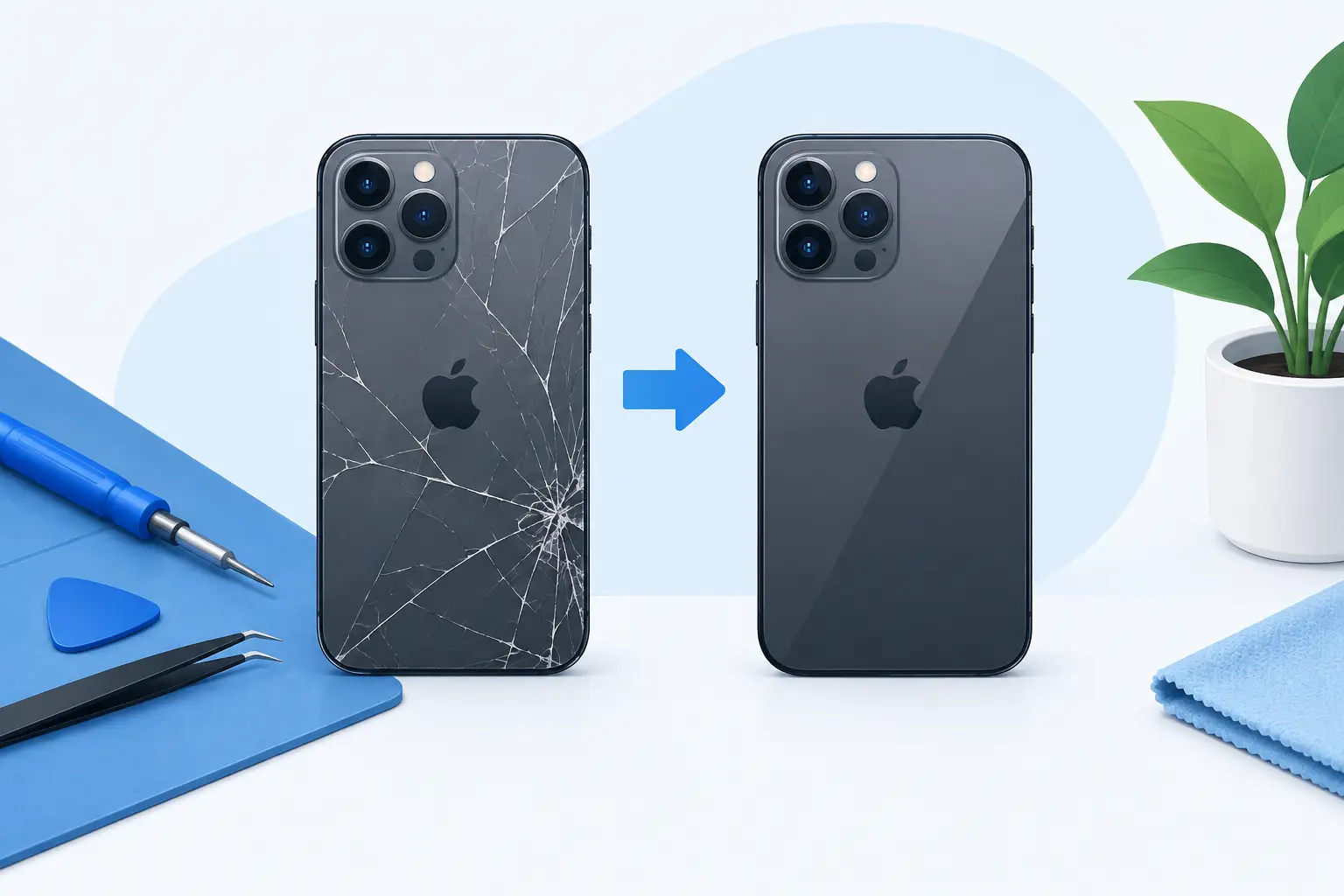
A cracked iPhone back can look like a cosmetic problem until tiny shards start catching on your hand, the camera surround becomes exposed or wireless charging stops behaving as it should. This iPhone back glass repair example shows what a proper repair involves, why the model matters and what should happen before you hand over your phone.
Why cracked back glass needs more than a quick fix
The rear glass is bonded firmly to the iPhone frame. On many models, it sits close to important components including the battery, wireless charging assembly, cameras and internal cables. That is why replacing it is not the same as fitting a screen protector or swapping a case.
A crack may be limited to one corner, but it can spread quickly with everyday pressure, temperature changes and another minor knock. If pieces are loose, the sharp edges can make the phone unpleasant and unsafe to use. Damage around the camera lenses also needs prompt attention, as dust and moisture may find their way into an area that needs to stay clean for reliable photos and video.
A case can temporarily contain the problem, but it does not restore the glass or protect the damaged area properly. If the handset is otherwise working well, a professional repair is often a more sensible and cost-effective option than replacing the entire device.
iPhone back glass repair example: a typical assessment
Imagine an iPhone brought in after falling from a kitchen worktop. The front display still works, Face ID is functioning and the cameras are taking clear photos. However, the rear glass is heavily cracked, with several missing pieces around the lower half of the phone.
The first step is not to start removing glass. An experienced technician checks the exact iPhone model, because the construction and repair method vary considerably between generations. They then inspect the frame, camera housings, rear lenses, buttons and charging port. A drop hard enough to crack the rear can also bend the housing or cause a fault that is not immediately obvious.
Next comes a functional test. This normally includes checking the display, touch response, cameras, flash, microphone, speakers, network signal, charging and wireless charging where available. If there is an existing issue, it should be recorded before work begins. This protects the customer and ensures the repair quote reflects the actual condition of the phone.
In this example, the phone charges by cable and works normally, but wireless charging is intermittent. The technician would explain that the rear impact may have affected the charging assembly or its connection. The back glass repair can still be completed, but the final cost and turnaround depend on whether further work is required after inspection.
That is the value of a clear assessment. It avoids a misleading one-price promise where a customer discovers additional problems only after the phone has been dismantled.
Choosing the right repair method
There is no one method that suits every iPhone. On certain models, the rear housing may need more extensive work, while other designs allow for a more direct rear-glass repair. The correct approach depends on the phone’s construction, the extent of the damage and whether the frame remains straight and secure.
A technician may use controlled heat and specialist equipment to carefully remove broken glass and adhesive. On some repairs, precision laser equipment can help break down the adhesive beneath the glass. This can be effective, but it is not a shortcut. The phone still needs careful preparation, component protection, thorough cleaning and precise fitting of the replacement glass.
The goal is to remove fragments without damaging the camera area, charging components or internal parts. Rushing this stage can lead to avoidable issues such as a damaged wireless charging coil, poor adhesive contact or glass that sits unevenly in the frame.
The repair itself
Once the phone is prepared, the damaged back glass is removed in controlled sections. The frame is cleaned carefully so no loose shards or old adhesive prevent the new panel from sitting correctly. This is particularly important around the camera opening, where a poor fit can leave gaps and spoil the finished appearance.
If the impact has bent the frame, the technician will advise whether it can be corrected or whether a housing replacement is the better long-term option. Fitting new glass onto a distorted frame may look acceptable at first, but it is more likely to lift, crack again or leave the device vulnerable to further damage.
The replacement glass is then fitted with suitable adhesive and aligned with the camera section, logo and edges. It needs time to bond securely. While some repairs can be completed the same day, the exact collection time should be based on the model, damage level and any additional faults found during testing.
What should be tested after an iPhone back glass repair?
A repaired phone should not simply be switched on and handed back. In this iPhone back glass repair example, the final checks would cover the cameras and flash, wired and wireless charging, signal, buttons, speakers and microphones. The technician should also inspect the rear panel for secure bonding, clean edges and correct alignment.
Wireless charging deserves particular attention. The charging coil sits behind the back of the phone, so it is one of the functions most relevant to a rear-glass repair. A proper test confirms whether the phone charges reliably on a compatible wireless charger rather than merely recognising it for a few seconds.
It is also sensible to check camera focus at different distances, especially after damage near the lens surround. A camera may open normally but still show blur, focus hunting or a warning message if the drop affected a component.
Water resistance is a separate point worth understanding. iPhones are manufactured with seals, but any phone that has been opened or suffered impact should not be treated as waterproof. A quality repair aims for a secure fit and careful workmanship, but avoiding unnecessary exposure to water remains the safest approach.
What affects the cost and repair time?
The exact iPhone model is the biggest factor. Back glass construction differs across the range, and so do the parts, labour and time required. The amount of damage also matters. A simple crack with an intact frame is different from shattered glass around the camera, a bent housing or a fault with wireless charging.
Price should be clear before work goes ahead wherever possible. If an inspection reveals an additional issue, you should be told what has been found, what it means and what the options are. That might mean proceeding with the original repair, adding the necessary component repair or deciding that a replacement device makes more financial sense.
Turnaround can be while-you-wait for selected repairs, but it depends on parts availability and the condition of the handset. Same-day service is useful when your phone is essential for work, study, banking, travel or family contact, but careful testing should never be skipped just to make a collection time.
When repair is the sensible choice
Back glass repair is usually worth considering when the iPhone has a healthy battery, working display and no serious internal fault. It can restore the look and day-to-day comfort of a device you already know and rely on, without the cost and disruption of moving everything to a new phone.
It may be less suitable where there is major frame damage, repeated faults, liquid damage or a repair cost that is too close to the value of a replacement handset. An honest repairer should explain that rather than push a repair that does not offer good value.
For Sheffield customers, Mobitech Sheffield can assess the damage, provide a transparent quote and carry out the work with experienced technician support. The right answer is not always the quickest-looking fix. It is the repair that leaves your iPhone safe to use, properly tested and ready to get back into your routine.
If your back glass has cracked, keep the phone in a case where possible, avoid pressing on loose fragments and arrange an assessment before a small break becomes a more expensive repair.
