
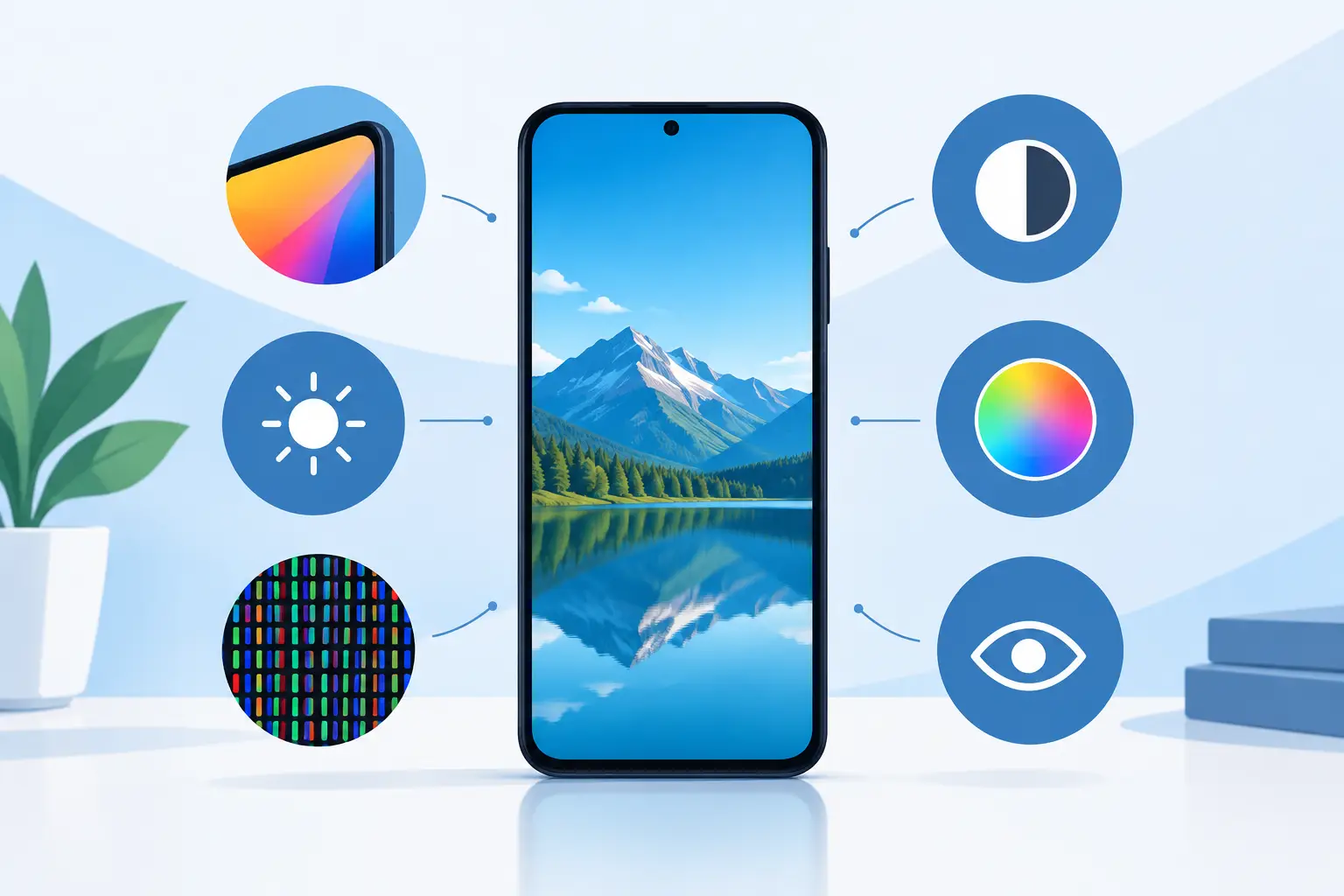
A cracked display is not always just a cosmetic problem. Phone screen quality affects how clearly you can read messages, how accurately the touchscreen responds, how well the phone copes outdoors and, in some cases, how long the battery lasts. When a screen is damaged or replaced, the difference between a good-quality repair and a poor one quickly becomes clear.
For most people, the right choice is not simply the cheapest replacement screen. It is the screen that brings the device back to reliable daily use, without unwanted compromises in brightness, colour, touch response or durability.
What determines phone screen quality?
A phone display is made up of more than the glass you touch. Depending on the model, it may include the front glass, touchscreen digitiser, display panel, frame and fingerprint sensor components. Damage to one layer can affect another, which is why a phone with only a small crack can later develop black patches, flickering, dead touch areas or a display that stops working altogether.
The display panel itself has the biggest influence on the image you see. OLED and AMOLED screens, used on many newer Apple, Samsung and Google Pixel models, produce deep blacks and strong contrast because individual pixels switch off completely. LCD screens use a backlight and are still common on many phones and tablets. They can offer a clear, dependable picture, but blacks may appear more grey in low light and viewing angles can be more limited.
Resolution also matters, although it is not the whole story. A high-resolution screen looks sharp, especially when reading small text or editing photos, but brightness, contrast and colour accuracy make just as much difference in day-to-day use. A screen can have plenty of pixels and still look washed out if the panel is poor quality.
Brightness, colour and refresh rate in real use
Screen specifications can look impressive on a product page, but the practical test is whether you can use the phone comfortably. Brightness matters when checking directions outside, answering a call on a sunny day or reading a message on the commute. A replacement screen that is noticeably dimmer than the original can make the device frustrating to use, even if the glass looks perfect.
Colour accuracy is another area where quality parts matter. A good display should show natural skin tones, clean whites and balanced colours. Lower-grade panels can look overly blue, too warm or excessively saturated. This may not matter much for a spare handset, but it is more noticeable if you use your phone for photos, social media, work documents or streaming.
Many newer devices also use a higher refresh rate, such as 90Hz or 120Hz. This makes scrolling, gaming and animations feel smoother. Not every replacement display supports the same refresh rate or behaves in exactly the same way as the original part. If smooth performance is important to you, it is worth asking what quality of screen is being fitted before the repair begins.
Touch response is part of screen quality
A clear picture is only half the job. Your phone needs to react accurately when you type, swipe, use a banking app or answer a call. The digitiser is the layer that detects touch, and faults here can show up as delayed typing, random presses, missed swipes or sections of the screen that no longer respond.
Poor touch response is especially frustrating on larger phones, where one dead area can prevent you from reaching controls or entering a passcode. It can also affect gaming, handwriting tools and apps that rely on precise gestures.
After a proper screen repair, touch should feel natural across the whole display. Face ID, fingerprint recognition, proximity sensors and automatic brightness should also be checked where relevant. Some features depend on model-specific components and careful fitting, so screen replacement is not a job to rush or treat as a one-size-fits-all repair.
Original, premium and budget replacement screens
There is no single answer to which replacement screen is best, because it depends on the phone, its age, its value and how you use it. The most expensive option is not automatically necessary, but the lowest quote may leave out details that affect the finished result.
Original service parts, where available, are designed to match the device specification closely. They are often the strongest choice for newer premium phones, particularly where display brightness, colour, biometric functions and software calibration matter. Availability varies by manufacturer and model.
Premium aftermarket screens can be a sensible, cost-effective option for many repairs. A good-quality aftermarket part can deliver a strong image, responsive touch and dependable everyday performance at a lower price than an original part. The key is that the part should be selected for the specific model rather than fitted simply because it is cheap.
Budget screens may suit an older device that only needs to stay usable for a short period. However, they can involve trade-offs such as lower brightness, thicker bezels, weaker colour reproduction or reduced durability. Transparent pricing matters here. You should know what is being fitted and why, so you can choose the right balance between cost and performance.
Signs a damaged screen needs repair now
A hairline crack may seem manageable, but damaged glass is weaker and can spread after another knock. More importantly, exposed edges can let dust and moisture reach the layers beneath. A simple cracked-glass repair can turn into a full display replacement if the panel later fails.
Book a repair promptly if you notice black ink-like patches, coloured lines, flickering, flashing, ghost touches, loss of touch response or a screen that stays black while the phone still makes sounds. These are common signs of internal display damage, not problems that a screen protector can solve.
You should also avoid pressing hard on a damaged screen or attempting to glue loose glass back into place. Pressure can damage the panel further, while adhesives can interfere with sensors and make a later repair more difficult. Back up your phone if possible, then have the fault assessed by an experienced technician.
What a quality screen repair should include
A good repair is about more than fitting a new panel. The device should be inspected to confirm whether the issue is limited to the screen or whether the frame, battery, charging port or internal connectors have also been affected by the drop.
The replacement screen needs to be fitted securely and aligned properly, with cables and sensors handled carefully. Once assembled, the phone should be tested for display clarity, touch sensitivity, call proximity behaviour, front camera operation, speaker performance and charging. On supported models, biometric features should also be checked.
Ask about the part quality, expected turnaround, warranty and total price before work starts. A trustworthy repairer will explain the options clearly rather than using vague descriptions or adding unexpected costs after the device has been opened. At Mobitech Sheffield, repairs are assessed with clear advice, transparent pricing and warranty-backed workmanship, helping you make a confident decision when your phone is out of action.
Protecting screen quality after a repair
Even a high-quality replacement screen benefits from sensible protection. A properly fitted screen protector can reduce scratches and absorb some of the force from minor knocks. A case with raised edges adds protection when the phone lands face down, though no case can guarantee survival from every drop.
Keep the charging port and earpiece area clean, and avoid leaving your phone on a dashboard or radiator for long periods. Excess heat can affect display performance and battery health over time. If the screen starts lifting from the frame, do not keep pressing it down. This can indicate impact damage, adhesive failure or, less commonly, a swollen battery that needs attention.
Your phone does not need a perfect showroom display to be worth repairing. It needs a screen that is clear, responsive and dependable when you need it most. Choosing the right quality replacement now can save you from another interruption a few weeks later.
