
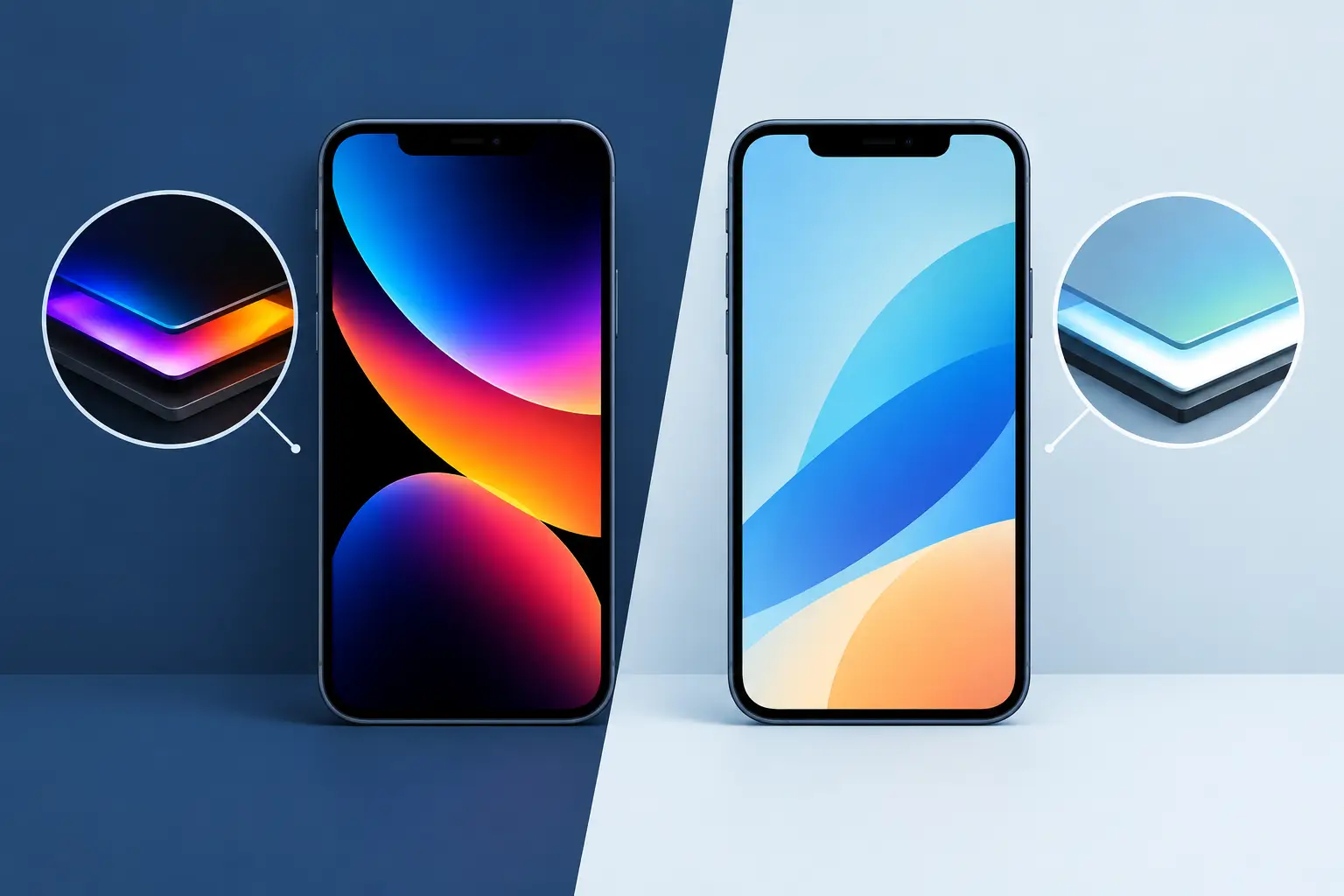
A cracked phone screen does not always need the most expensive replacement, but choosing the wrong one can leave you with a display that looks dimmer, feels less responsive or does not work properly with your device. An OLED versus LCD replacement decision comes down to more than price. Your phone model, the original screen type, how you use it and the quality of the replacement all matter.
For many modern Samsung, Google Pixel and iPhone models, OLED is the original display technology. Other devices use LCD screens as standard. In some cases, an LCD can be fitted as a lower-cost alternative to an OLED, but that trade-off needs to be clear before the repair begins.
OLED versus LCD replacement: the main difference
OLED and LCD displays create images in different ways. An LCD screen uses a backlight behind the display panel. Even when part of the image is black, the backlight is still on behind it. OLED pixels produce their own light and can switch off individually, creating deeper blacks and stronger contrast.
On a good OLED display, black areas look properly black rather than dark grey. Colours can appear more vivid, contrast is sharper and the screen can be thinner. This is why OLED is widely used on premium smartphones.
LCD remains a reliable and capable display technology. It is often more affordable to replace and can offer clear text, accurate images and dependable everyday performance. The difference is most noticeable when viewing dark content, watching video, gaming or using the phone at low brightness.
The best option is not automatically OLED. It is the screen that suits your device and your priorities without compromising essential features.
When an OLED replacement is usually the right choice
If your phone was supplied with an OLED display, replacing it with a quality OLED screen normally gives the closest result to the original. This is particularly relevant for newer iPhones, Samsung Galaxy models, Google Pixel phones and many flagship handsets from other manufacturers.
An OLED replacement is generally the better choice if you want to retain the original look and feel of the device. You are more likely to keep the deep black levels, rich contrast, slim display profile and smooth viewing experience you paid for when buying the phone.
It can also matter for features built around the screen. Many OLED phones use an in-display fingerprint sensor. A compatible OLED replacement is more likely to support that sensor correctly, although proper fitting and calibration can still be required. Always have the device checked after repair rather than assuming every feature will work exactly as before.
OLED is also a sensible choice if you use your phone heavily for photos, streaming, social media, games or work. If you spend several hours a day looking at the display, a lower-quality screen can become frustrating quickly.
The trade-off is cost. OLED panels are usually more expensive than LCD equivalents, especially on recent flagship devices. Where the handset is older or already has other faults, it may be worth comparing the repair price against the device’s remaining value.
Why some customers choose an LCD replacement
An LCD replacement can be a practical way to get a damaged phone working again at a lower cost. This is most common where an LCD version is available as an alternative for a phone originally fitted with OLED, or where the device was designed with LCD from the start.
For a spare phone, a child’s device, a work handset or an older model you plan to replace soon, keeping the repair cost down can be the priority. A good-quality LCD can still provide a bright, usable screen for calls, messages, maps, banking and everyday apps.
However, an LCD conversion is not an identical replacement for an OLED display. It may be slightly thicker, use more battery power in some situations and show reduced contrast. Blacks may look grey in dark conditions, while colours and viewing angles can be less impressive. Depending on the model and part used, fingerprint functionality, brightness behaviour or fit around the frame may also differ.
That does not make LCD a poor repair. It means it should be chosen with realistic expectations. A trustworthy repairer should explain whether the part is an original-specification replacement, a compatible OLED or an LCD alternative, along with the price difference.
Screen quality matters as much as the technology
Not all OLED or LCD replacements are equal. Two screens described using the same technology can perform very differently because of the panel grade, touch layer, brightness, colour tuning and frame quality.
A cheap replacement may initially look acceptable but develop poor touch response, uneven brightness, weak colours or dead areas after a short time. Poor-quality displays can also make the repair harder to trust if the frame does not sit correctly or the screen is not properly sealed.
This is why the cheapest quote is not always the best value. Ask what type of part is being fitted, whether it is designed for your exact model and what warranty is provided on the repair. Transparent answers are a good sign that the quote reflects the work being carried out, rather than a surprise downgrade.
A professional repair also includes more than attaching a new panel. The technician should inspect the frame, connectors and internal components for damage caused by the drop. If the housing is bent, simply fitting a new screen may leave it under pressure and increase the risk of another crack.
How to choose between OLED and LCD
Start with your phone’s original display. If it came with LCD, an LCD replacement is usually the straightforward and cost-effective route. If it came with OLED, ask for the prices and expected results for both OLED and LCD before deciding.
Consider how long you intend to keep the device. Paying more for OLED can make sense when the phone is otherwise in good condition, still receives software updates and remains your main handset. If you expect to upgrade shortly, a lower-cost LCD repair might be enough to keep it usable in the meantime.
Think about the features you rely on. If you use an in-display fingerprint scanner, watch films on your commute, edit photos or regularly use your phone outdoors, preserving OLED performance may be worth the extra spend. If your needs are mainly calls, messages and occasional browsing, an LCD may meet them perfectly well.
It is also worth considering the nature of the damage. A screen that is cracked but still displays an image may only need a display assembly replacement. A phone with no image, flickering lines, black blotches or failed touch response could have a more serious display fault. If the frame is badly damaged, the repair may need additional work to give the new screen a secure fit.
What to expect from a screen repair
Before fitting a replacement, the device should be tested to confirm whether the fault is limited to the screen. A damaged charging port, battery issue or internal board fault can sometimes be mistaken for a display problem, particularly when the phone will not turn on.
Once the correct screen has been agreed, the repair involves carefully removing the damaged panel, checking internal connections, fitting the new display and testing the device again. Touch response, brightness, cameras, earpiece, proximity sensor, charging and biometric features should be checked where applicable.
Water resistance deserves a clear word of caution. Phones with factory water resistance use seals that can be disturbed during any screen repair. A careful repair can help protect the device, but no repaired handset should be treated as guaranteed waterproof unless that has been specifically confirmed.
At Mobitech Sheffield, customers can discuss the available screen options before work starts, so the price, part type and likely outcome are clear. That is especially useful when an OLED and LCD option are both available for the same model.
Make the choice that fits your phone and budget
A screen repair should make your daily life easier, not give you another problem to manage. OLED is usually the closest match for a phone designed around OLED, while LCD can be a sensible lower-cost option when performance expectations and compatibility have been discussed properly.
Before agreeing to the repair, ask what screen type is being fitted, whether key features will be tested and what warranty covers the work. With the right advice and a quality part, your phone can return to being the reliable device you need for work, study, travel and everyday life.
