
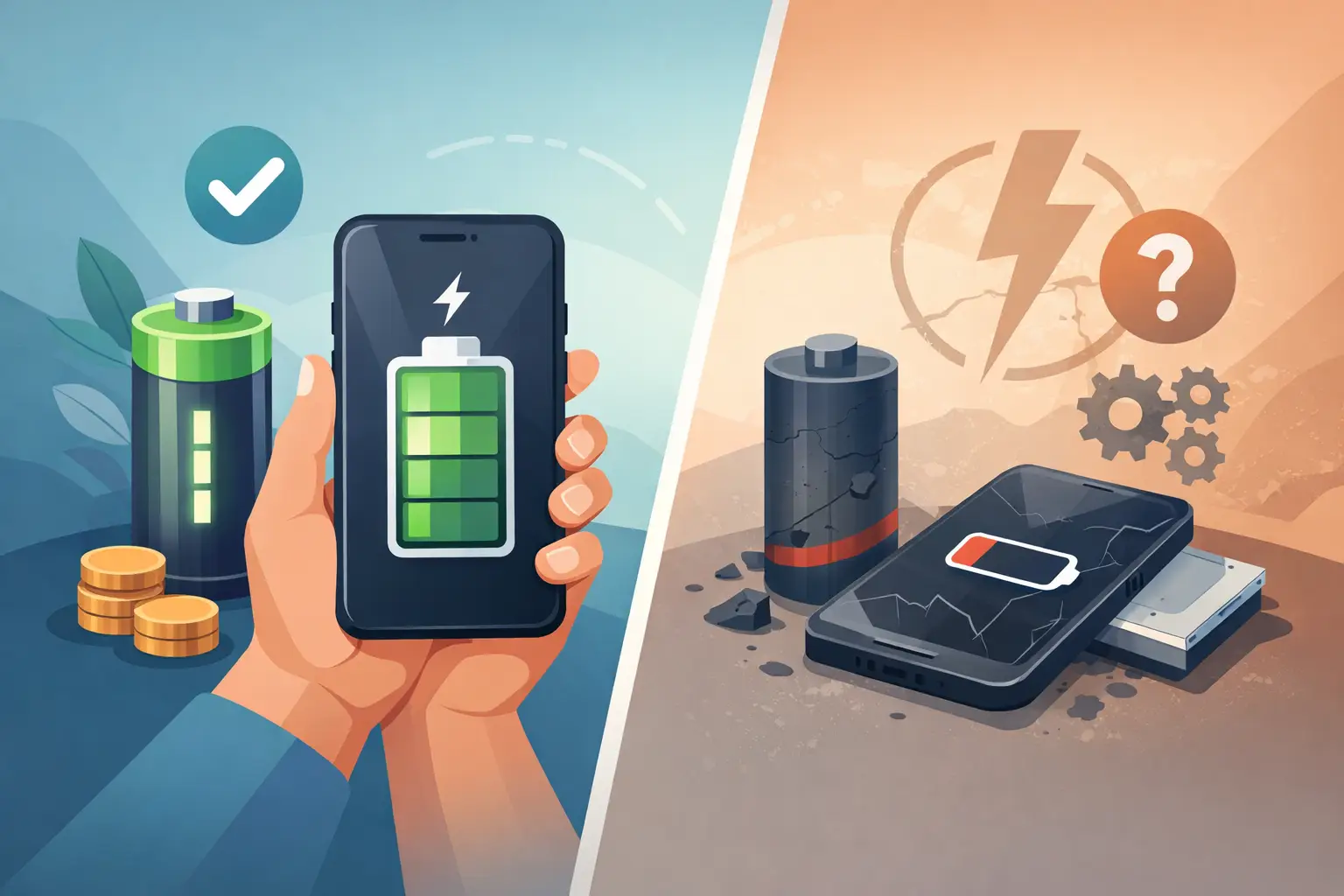
That moment when your phone drops from 28% to 3% in minutes usually answers the question for you. For many people, is battery replacement worth it becomes urgent when a device stops lasting through work, study, school runs or the commute. The short answer is often yes, but only when the rest of the device is still in good shape and the repair cost makes sense against its age and value.
A failing battery does not always mean the whole device is finished. In plenty of cases, replacing the battery is the most cost-effective way to get another year or two from a phone, tablet or laptop you already know and rely on. The key is knowing when a battery issue is just a battery issue, and when it is a sign that the device is reaching the end of the road.
Is battery replacement worth it for most devices?
In practical terms, battery replacement is usually worth it when the device still does what you need it to do. If your phone is still fast enough for calls, banking, messages, maps and photos, a new battery can restore day-to-day reliability without the cost of buying new. The same applies to tablets used for streaming or schoolwork, and laptops that perform well apart from poor battery life.
What makes people hesitate is the idea of putting money into an older device. That is fair. No repair exists in a vacuum. If your handset has a badly cracked screen, poor camera performance, no storage left and software support ending soon, a battery replacement may not be the smartest spend. If the only real problem is that it needs charging constantly, the maths often looks much better.
There is also the convenience factor. Setting up a new device takes time. You have data to move, apps to sign back into, banking checks to complete, accessories to replace and, in some cases, contracts to think about. A battery replacement can be the simpler fix when you just want your device working properly again without the hassle.
Signs your battery is the real problem
Not every power-related fault comes down to battery health, so it helps to know the difference. The clearest sign is rapid battery drain that has worsened gradually over time. If a device once lasted all day and now struggles to reach lunchtime under the same use, battery wear is likely.
Unexpected shutdowns are another common clue. A phone that powers off at 20% or restarts when you open a demanding app may be struggling to supply steady power. Swelling is more serious. If the screen is lifting, the back cover is separating or the chassis no longer sits flat, stop using the device and get it checked promptly.
Laptops show similar symptoms. They may only hold charge for a short time, switch off when unplugged or become unreliable at lower percentages. Tablets often behave like phones – quick drain, slow charging or erratic percentage jumps. On smart watches, a worn battery tends to show up as dramatically shortened runtime rather than total failure.
Of course, charging issues are not always battery issues. A damaged charging port, faulty cable, software problem or power management fault can produce similar symptoms. That is why proper diagnosis matters before paying for any repair.
When battery replacement makes financial sense
The strongest case for replacement is when the repair cost is a fraction of the cost of a comparable new device. That applies especially to premium phones and laptops, where a battery repair can restore useful life at a much lower price than upgrading.
It also makes sense when the device still meets your needs. A three-year-old phone with decent cameras and smooth performance can remain perfectly usable with a fresh battery. A laptop used mainly for email, office tasks and streaming may have years left in it if the battery is renewed.
Another good reason is avoiding waste. Replacing a battery rather than replacing the whole device is often the more sensible option environmentally, but most customers think about this in practical terms first. If the device is otherwise sound, getting more use from it is simply better value.
For many Sheffield customers, the decision comes down to urgency. If you need your device daily for work, family life or university, a quick, local repair is often easier than researching, buying and setting up something new. That is exactly why same-day battery services are popular – they remove disruption as well as cost.
When it is probably not worth it
There are cases where battery replacement is not the right move. If the device is already very old, struggles with current apps, no longer receives security updates or has multiple faults, the money may be better put towards replacement.
The same applies if the repair cost is high compared with the device’s current value. This can happen with lower-cost tablets, older budget phones or heavily worn laptops. A battery might improve runtime, but it will not fix a machine that is already too slow, overheating, physically damaged or failing in other areas.
You should also be cautious if the device has signs of liquid damage or motherboard faults. In those cases, poor battery life may be one symptom among several. Replacing the battery alone may not solve the underlying issue.
This is where honest advice matters. A trustworthy repairer should tell you when a battery replacement is likely to help, and when it is better not to spend the money.
Is battery replacement worth it on an iPhone, Samsung or laptop?
For newer and mid-life iPhones and Samsung phones, the answer is very often yes. These devices are expensive to replace, and battery wear is one of the most common reasons people feel pushed towards an upgrade earlier than necessary. If performance is still solid and the handset is in good condition, a battery replacement can be a very sensible investment.
Google Pixel phones, iPads and other premium tablets also fall into this category. If the screen, storage and speed still suit you, battery renewal can make the device feel dependable again.
Laptops are a bit more mixed. If the machine boots well, handles your workload and only struggles away from the charger, battery replacement is often worthwhile. If it is already painfully slow, has a failing keyboard, worn hinges or a dim screen, the value is less clear. A laptop battery should support an otherwise healthy machine, not rescue one that is declining across the board.
Games consoles and smart watches depend more on the exact fault and model, but the same principle applies. If the battery is the only thing standing between you and a fully usable device, replacement is usually worth considering.
What to weigh up before you book
Before deciding, think about age, performance, condition and total repair value. Ask yourself whether you would be happy keeping the device for another 12 to 24 months if the battery were sorted. If the answer is yes, replacement usually has a strong case.
It is also worth thinking about repair quality. A battery replacement is only worth it if the work is done properly with reliable parts and clear aftercare. Cheap, poor-quality batteries can lead to weak performance, inaccurate charge readings or repeat failure. The lowest quote is not always the best value.
Turnaround matters as well. If you rely on your device every day, speed is part of the value. A local repair shop that can diagnose the fault clearly, explain the cost upfront and complete the work quickly is often the most practical option.
At Mobitech Sheffield, that is generally how customers approach it. They are not looking for a complicated technical debate. They want to know whether the repair is sensible, how long it will take, what it will cost and whether the device will be dependable afterwards.
The real answer to is battery replacement worth it
Battery replacement is worth it when it restores a device you already like using, saves you money over replacing it and avoids unnecessary disruption. It is less worth it when the device is outdated, damaged in several ways or close to the end of its useful life anyway.
Most of the time, the right decision is not about the battery alone. It is about the condition of the whole device and whether a repair gives you meaningful extra use for a fair price. If the rest of the device is still doing its job, a new battery can be one of the most straightforward repairs you can make.
If you are unsure, the best next step is simple: get the device properly assessed and base the decision on facts, not guesswork. A good repair should leave you with more confidence in your device, not more doubt.
